
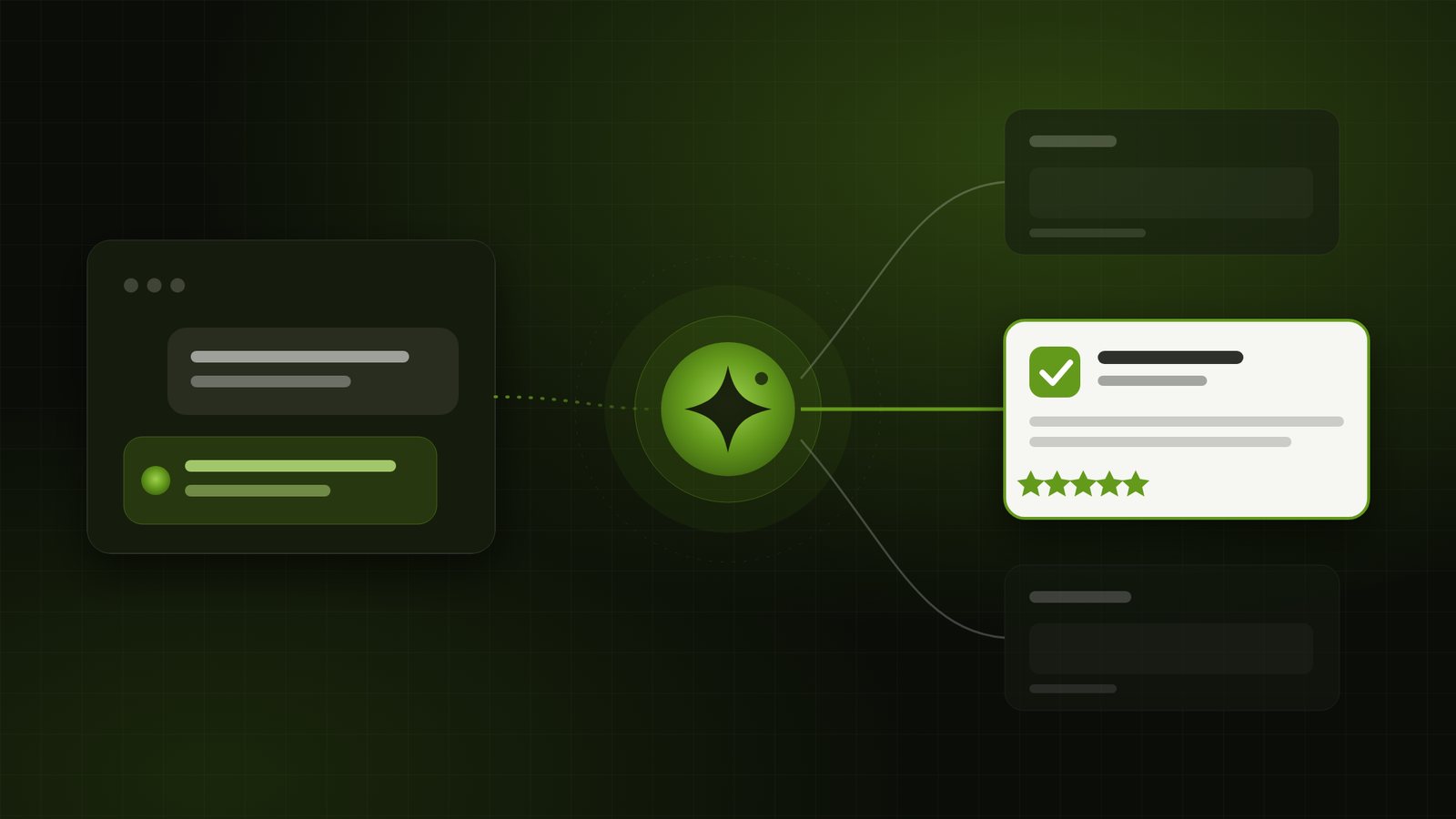
For years, online commerce was explained with two acronyms: B2C (business to consumer) and B2B (business to business). In both cases there was a person on the other side: someone who searched on Google, opened several tabs, compared and finally called or wrote on WhatsApp.
That is changing. More and more, the first “visit” to your website is not made by a person but by an artificial intelligence agent that researches, compares and, in some cases, buys on someone's behalf. This new model is known as B2A: Business to Agent.
1. What is B2A (Business to Agent)?
B2A describes the relationship in which a company's immediate customer is an AI agent. A person —a consumer or a company's purchasing department— delegates a task to the assistant, and it is the assistant that searches, filters and presents the options.
Imagine a purchasing manager in San Luis Potosí asking ChatGPT, Copilot or Gemini:
“Find me three industrial maintenance suppliers in San Luis Potosí with current certification that respond in under 48 hours. Compare them.”
The agent reviews websites, business profiles, reviews and directories, and delivers a shortlist. If your company is not on that list, for that buyer you simply do not exist, even if you offer the best service in the area.
2. It's not science fiction: what is already happening
The big platforms are already building the infrastructure for agents not only to recommend, but also to act:
- Model Context Protocol (MCP): introduced by Anthropic in late 2024, it lets AI agents connect to companies' systems and data.
- Agentic Commerce Protocol (ACP): launched by OpenAI and Stripe in September 2025 to make purchases directly within a conversation with ChatGPT.
- Universal Commerce Protocol (UCP): introduced by Google in January 2026 so merchants can expose their catalog, orders and payments to agents.
Gartner estimates that by 2028 AI agents will act as intermediaries in some 15 trillion dollars in business-to-business purchases. It is worth being realistic: fully automatic purchasing is still emerging and many people still prefer to give the final “yes”. But the stage of researching and comparing suppliers is already being delegated to AI, and that is where the opportunity is won or lost.
3. And what does GEO positioning have to do with it?
GEO (Generative Engine Optimization) is the work of making your company visible in AI-powered search engines: ChatGPT, Google with its overviews and AI Mode, Microsoft Copilot, Perplexity, Gemini and similar tools. Note: it has nothing to do with geolocation.
The difference from traditional SEO is simple:
- SEO: aims for you to appear in a list of links so a person clicks.
- GEO: aims for AI to understand what you do, trust your information and mention or recommend you in its answer.
Before an agent can quote, schedule or buy from you, it first has to find and understand you. That is why GEO is the first step of B2A: without visibility in AI engines, your company never makes the shortlist.
4. What an “agent-ready” website looks like
These are the foundations we recommend working on, with no magic formulas:
- Clear information in text: services, geographic coverage, response times, certifications and, if possible, prices or ranges. What is only in an image or a scanned PDF is hard for an AI to use.
- One page per service: each service with its own URL, clearly explained, instead of everything crammed onto a single page.
- Real frequently asked questions: direct answers to what your customers ask. It is the format AI assistants use most easily.
- Structured data (Schema.org): markup that tells machines who you are, what you offer and where you are, always consistent with what is shown on the page.
- A consistent identity everywhere: the same name, address, phone number and description on your website, your Google profile, LinkedIn, directories and business chambers.
- A technically healthy website: fast, with an SSL certificate, easy to crawl and without mistakenly blocking the AI crawlers you do want to read you.
- Trust signals: reviews, clients, success stories, partnerships and mentions on other sites.
- The next level: catalogs, quote tools, contact forms or customer portals that an agent can read and complete without friction.
An honest warning: no one can guarantee that your company will appear in ChatGPT's or Google's answers. Be wary of anyone who promises it or sells you a single trick. GEO positioning is constant work on the quality, clarity and consistency of your information.
5. We apply it at home first
At ENKO WebStudio we are applying these same principles to our own website: dedicated pages for each service, a frequently asked questions section and structured data aligned with what we publish. What we learn at home is what we bring to our clients' portals and websites.
Frequently asked questions
Does B2A replace traditional SEO?
No. It complements it. A website well built for SEO —fast, clear and well structured— is the foundation on which GEO and agent readiness are built.
Does this apply to small businesses or only to large online stores?
It applies to any business that wants to be found. In fact, an SME or an industrial supplier with clear information can compete better in an AI answer than in a list of paid ads.
Can I guarantee that ChatGPT will recommend my company?
There is no such guarantee. What you can do is increase the odds: information that is verifiable, consistent and easy to understand for both people and machines.
Conclusion: your website now has two kinds of visitors
Your website no longer talks only to people; it also talks to the AI agents that work for them. The companies that prepare today will be the ones on the shortlist tomorrow. Is your website ready for an AI to recommend it?
 Posted by ENKO WebStudio